


What Does a Stucco Crack Really Mean?
Why one crack may be cosmetic while another deserves a closer look

One of the first things homeowners notice on a stucco home is a crack.
Sometimes it's a thin hairline near a window. Other times it's a longer crack following a corner or expansion joint. The natural question is:
*"Should I be worried?"*
The honest answer is—it depends.
Stucco naturally expands and contracts as temperatures change. Minor hairline cracking can occur as a home settles and materials respond to normal movement. In many cases, these small cracks are simply part of the aging process and don't indicate a larger problem.
What matters is **how the stucco system is performing**, not just how it looks.
During our inspections, we've seen homes with visible cracking that showed little or no elevated moisture behind the stucco. We've also inspected homes that appeared relatively normal from the outside but had significant moisture intrusion hidden beneath the surface. Appearance alone doesn't always tell the whole story.
That's why inspectors evaluate more than the crack itself. They look at its location, pattern, nearby sealants, flashing details, window and door penetrations, and other conditions that affect how water is managed around the home.
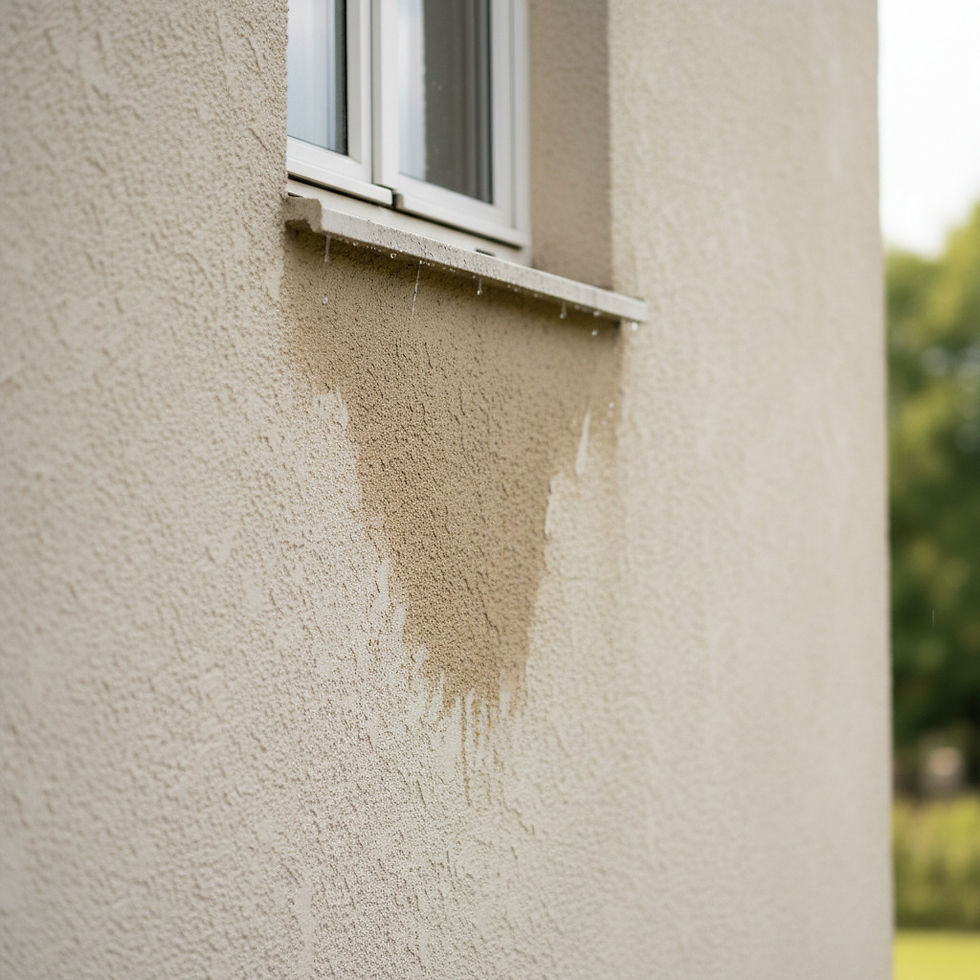
Homeowners can help by paying attention to changes over time. Has a crack grown noticeably? Are new cracks appearing in the same area? Is staining developing nearby? Does caulking around windows or doors appear to be separating? These observations help establish whether a condition is changing or remaining stable.
The important thing to remember is that **a crack is an observation, not a diagnosis**. Some cracks are primarily cosmetic. Others may indicate that water has an opportunity to enter the wall system. The difference isn't determined by size alone—it's determined by understanding the entire exterior assembly.
That's why stucco inspections focus on the system as a whole. Looking beyond the surface provides a much clearer picture of how well the home is protecting itself from Houston's heat, humidity, and frequent summer rains.


Comments